What Are You Looking For?
A commercial solar system is more than a collection of solar panels installed on a factory roof or commercial building. It is an integrated power solution designed to generate electricity, reduce dependence on grid power, and support the long-term energy requirements of a business. From factories and warehouses to shopping centers, office buildings, agricultural facilities, and industrial parks, commercial solar systems can be customized to match different electricity consumption patterns and operating conditions.
However, choosing the right commercial solar system requires careful planning. System capacity, roof conditions, solar panel efficiency, inverter compatibility, battery storage, installation costs, and local grid regulations all influence the final project. A system that works well for one facility may not be suitable for another.
This guide explains how to plan, design, select equipment for, and install a commercial solar power system. It also covers the differences between on-grid, off-grid, and hybrid configurations, helping businesses, EPC contractors, and solar project developers make better purchasing decisions.
A commercial solar system is a photovoltaic (PV) power generation system designed to supply electricity to businesses, industrial facilities, and other non-residential properties. It converts sunlight into DC electricity through solar panels and uses inverters to convert that electricity into AC power for commercial equipment and building operations.
Depending on the project's energy requirements, a commercial solar system may operate in three main configurations:
For most commercial buildings with stable daytime electricity consumption, an on-grid system can be a practical starting point. Businesses that experience frequent power interruptions or need electricity outside solar production hours may benefit from a hybrid configuration with battery storage.
PNG Solar provides different configurations through its commercial solar system solutions, including on-grid, off-grid, and hybrid systems that can be adapted to different project requirements.
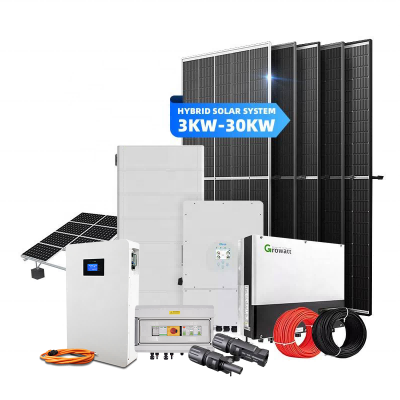
A commercial solar power system follows a relatively straightforward energy conversion process, but each component must be correctly selected and connected to ensure reliable operation.
The typical electricity generation process includes the following steps:
In a hybrid system, an energy management system coordinates solar generation, battery charging and discharging, and grid power. This allows businesses to manage electricity consumption more flexibly and use stored energy when it provides operational or financial value.
Before selecting solar panels or inverters, businesses should understand how much electricity their facilities consume and when that electricity is needed. This is the foundation of commercial solar system design.
A professional assessment should consider several factors:
For example, a manufacturing facility that operates mainly during daylight hours may consume a large proportion of its solar generation directly. In this situation, a grid-connected solar system without extensive battery storage may offer a suitable design.
By comparison, a cold storage warehouse operating around the clock may need a different configuration. Battery storage could help shift solar energy into evening or nighttime consumption periods, although the required capacity depends on the facility's load profile and financial objectives.
The key principle is simple: commercial solar systems should be designed around actual electricity demand rather than choosing a system capacity based only on available roof space.
After understanding electricity demand, the next step is to evaluate the available installation area. Commercial solar panels are commonly installed on factory rooftops, warehouse roofs, ground-mounted structures, parking canopies, and other suitable spaces.
Several site conditions can influence the final system design.
Roof area and structural capacity
The usable roof area determines how many solar panels can be installed. However, the entire roof should not automatically be treated as available space. Maintenance walkways, fire access routes, roof equipment, drainage systems, and safety setbacks must be considered.
A structural assessment is also important. Engineers should verify that the roof can safely support the additional dead loads and applicable wind and environmental loads associated with the PV installation.
Sunlight exposure and shading
Nearby buildings, trees, chimneys, ventilation equipment, and other obstructions can reduce solar generation. Shading analysis helps identify suitable panel positions and determine whether different array orientations or inverter configurations are necessary.
Environmental conditions
Temperature, wind, humidity, dust, rainfall, snow, and coastal salt exposure can all affect equipment selection and long-term performance. Projects in hot or coastal environments should pay particular attention to module temperature characteristics, corrosion resistance, equipment protection ratings, and mounting materials.
Electrical infrastructure
Existing switchgear, distribution panels, transformers, available connection capacity, and utility requirements should be reviewed before finalizing the design. These factors can influence inverter selection, electrical protection, and grid interconnection arrangements.
Commercial solar system capacity is generally expressed in kilowatts (kW) or megawatts (MW). Selecting the appropriate capacity requires balancing electricity demand, available installation space, solar resources, project budget, and grid connection limitations.
A useful preliminary calculation is:
Required PV capacity (kWp) = Target daily solar energy production (kWh) ÷ Average daily solar generation per kWp (kWh/kWp)
For example, assume a business wants its solar system to generate approximately 500 kWh of electricity per day, and the estimated local solar yield is 4 kWh per kWp per day.
500 kWh ÷ 4 kWh/kWp = 125 kWp
This gives a preliminary PV capacity of approximately 125 kWp. It is not a final equipment specification. A detailed design must also account for shading, module temperature, system losses, orientation, inverter limitations, and the actual energy consumption profile.
Commercial solar projects can range from relatively small rooftop installations to systems with hundreds of kilowatts or several megawatts of capacity.
For businesses evaluating larger installations, PNG Solar offers commercial project configurations including 100kW, 150kW, and 200kW hybrid solar energy storage systems. The final configuration can be adjusted according to the project's electricity requirements and site conditions.
Solar panels are the primary electricity-generating components of a commercial PV system. Their power rating, conversion efficiency, temperature characteristics, mechanical strength, and long-term performance all influence project output.
For commercial and industrial applications, N-type TOPCon solar modules are worth considering because they offer high conversion efficiency and can support high-power system configurations.
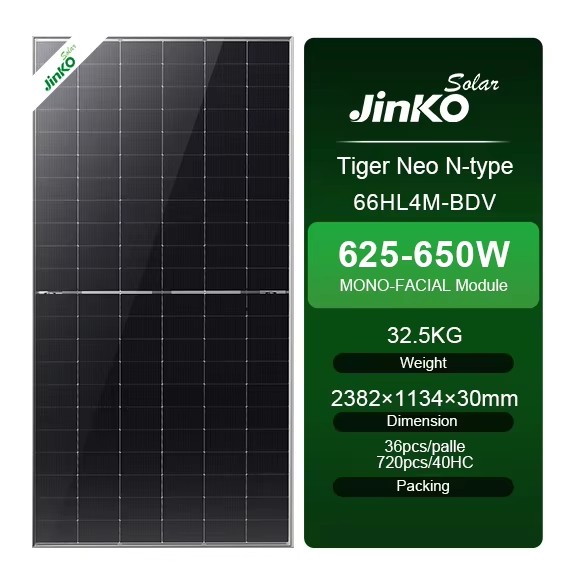
When comparing commercial solar panels, buyers should pay attention to the following specifications:
PNG Solar supplies different PV module options, including N-type TOPCon and bifacial solar panels for commercial projects. Buyers can explore the solar panel product range to compare available module configurations.
For larger installations, high-power modules can help optimize roof utilization and reduce the number of modules, connectors, and mounting points needed. However, the final selection should always consider inverter compatibility, transport requirements, roof layout, and installation conditions.
A solar inverter converts the DC electricity generated by PV modules into AC electricity that commercial facilities can use. It also plays an important role in system protection, grid interaction, and performance monitoring.
Commercial projects generally use string inverters, central inverters, or hybrid inverters, depending on system capacity and design requirements.
String inverters
String inverters connect groups of solar panels in series. They are commonly used in commercial rooftop projects because they offer a modular design and can simplify system expansion and maintenance.
Central inverters
Central inverters are generally used in larger installations where multiple PV strings are combined into a centralized conversion system. They can be suitable for large industrial and ground-mounted projects.
Hybrid inverters
Hybrid inverters coordinate solar generation and battery storage, and can also manage grid interaction where supported. They are particularly useful for projects that require energy storage and backup capabilities.
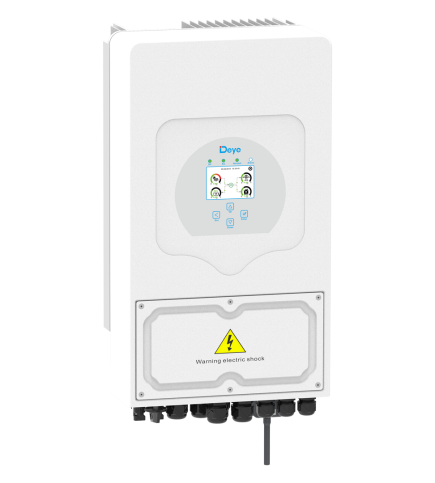
When choosing a commercial solar inverter, engineers should verify:
Inverter sizing should not be based on a fixed ratio for every project. The DC-to-AC ratio must be evaluated using the module specifications, site conditions, inverter limits, expected generation profile, and applicable grid requirements.
PNG Solar offers different inverter configurations for solar projects. Buyers can explore its solar inverter solutions to identify suitable options for grid-connected and hybrid applications.
Battery storage is not essential for every commercial solar installation. Whether a business needs batteries depends mainly on its electricity consumption schedule, grid reliability, electricity tariffs, backup requirements, and energy management strategy.
A commercial battery energy storage system can store excess solar electricity and release it when solar generation is insufficient or when stored energy offers greater operational value.
Battery storage may be particularly useful for:
For commercial and industrial applications, lithium iron phosphate (LiFePO4 or LFP) batteries are widely used because of their thermal stability, cycle-life characteristics, and suitability for stationary energy storage.
When evaluating a commercial battery system, buyers should consider usable energy capacity (kWh), rated power (kW), depth of discharge, round-trip efficiency, cycle-life conditions, operating temperature, battery management systems, and inverter compatibility.
It is also important to distinguish between battery power and battery energy. A battery rated at 100 kWh does not necessarily deliver 100 kW of power. Its discharge capability depends on its power rating and system configuration.
PNG Solar provides lithium battery and energy storage solutions, including options for commercial and industrial projects.
A commercial solar installation requires more than solar panels, inverters, and batteries. Supporting equipment, often referred to as balance-of-system components, is equally important for electrical safety and long-term reliability.
A complete system may include:
Mounting structures must be designed according to the roof or ground conditions. Aluminum alloy and hot-dip galvanized steel are commonly used materials, with selection depending on structural requirements and environmental exposure.
Electrical engineers should also verify cable sizing, voltage drop, overcurrent protection, grounding, insulation, and equipment coordination. These calculations help prevent overheating, electrical faults, and avoidable energy losses.
PNG Solar provides solar accessories and supporting components to help buyers coordinate the main equipment and system accessories during procurement.
Before construction begins, the project team should complete the engineering design and confirm the necessary approvals. Requirements vary by country, local authority, utility provider, and installation type.
A typical commercial solar project may require:
For grid-connected projects, utility coordination should begin early. The utility may need to review transformer capacity, export limitations, protection settings, metering arrangements, and interconnection requirements.
It is also important to confirm local standards before ordering equipment. For example, IEC-based requirements are widely used in international PV markets, while North American projects may need to meet applicable NEC, UL, and local electrical code requirements.
Once engineering documents, equipment specifications, permits, and installation arrangements have been confirmed, the construction stage can begin.
Although installation procedures differ between rooftop, ground-mounted, and hybrid projects, a typical commercial solar installation follows these activities:
Site preparation
Installation teams inspect the site, establish safety arrangements, prepare working areas, and confirm equipment delivery and storage conditions.
Mounting structure installation
Roof or ground mounting systems are installed according to approved engineering drawings. Structural attachments, waterproofing details, alignment, and fastening should be checked carefully.
Solar panel installation
Solar modules are positioned and secured according to the approved array layout. Installers should avoid unnecessary mechanical stress and follow the module manufacturer's installation instructions.
Inverter and battery installation
Inverters, battery cabinets, electrical distribution equipment, and associated protection devices are installed in their designated locations. Appropriate ventilation, clearance, environmental protection, and maintenance access must be maintained.
Electrical connections
DC and AC wiring, grounding, connectors, circuit protection, and communication cables are installed and inspected. Electrical connections should follow the approved design and applicable safety requirements.
Testing and commissioning
Before the system is energized, qualified personnel should perform the required inspections and electrical tests. These may include polarity checks, insulation resistance testing, grounding verification, protection checks, inverter configuration, and monitoring system verification.
For grid-connected systems, commissioning and operation must also follow the applicable utility approval and interconnection procedures.
Commercial solar systems are designed for long-term operation, but regular monitoring and maintenance are necessary to maintain performance and identify potential problems early.
A practical maintenance program should include:
Online monitoring platforms can help facility managers identify unexpected generation losses, inverter faults, and abnormal battery operation without relying entirely on manual inspections.
Preventive maintenance also helps businesses plan equipment servicing, reduce unexpected downtime, and protect their long-term investment.
The cost of a commercial solar system depends on several project-specific factors. There is no single price that applies to every installation, even when two systems have similar rated capacities.
The main cost components include:
Battery storage can increase the initial project investment, but it may provide additional value through backup power, energy shifting, and demand management. Its financial benefits depend on local electricity tariffs, operating schedules, battery utilization, and replacement costs.
Businesses should compare the total project cost with expected electricity savings, operating expenses, system degradation, financing costs, and applicable incentives.
A useful financial evaluation should include the following indicators:
For accurate project budgeting, buyers should request a detailed quotation based on actual site conditions, equipment specifications, delivery requirements, and installation scope.
For buyers evaluating medium-sized commercial and industrial projects, PNG Solar offers integrated hybrid solar energy storage configurations. These combine PV modules, hybrid inverters, lithium batteries, mounting structures, cables, and supporting electrical components.
The company's published product information includes the following examples:
| Specification | 100kW System | 150kW System | 200kW System |
|---|---|---|---|
| PV modules | 158 × 635W | 236 × 635W | 315 × 635W |
| Hybrid inverters | 50kW × 2 | 50kW × 2 | 50kW × 2 |
| Lithium batteries | 4 units | 6 units | 8 units |
| Battery specification | 51.2V 102Ah per unit | ||
| Mounting structure | Hot-dip galvanized steel or aluminum alloy | ||
Important: These are published product configurations, not universal design recommendations. The listed PV module quantities and ratings represent nominal DC module capacity, which should not be confused with inverter AC output capacity. Final system configuration, battery capacity, electrical ratings, and operating performance must be confirmed against the detailed project specifications.
For further specifications, component information, and configuration details, visit PNG Solar's 100kW–200kW commercial hybrid solar energy storage system product page.
For EPC contractors, distributors, project developers, and commercial buyers, choosing a reliable solar manufacturer is just as important as selecting the right system configuration.
A suitable supplier should provide more than individual products. Buyers should evaluate its ability to support equipment selection, component compatibility, project customization, documentation, and after-sales service.
Here are some practical points to check before placing an order:
As a solar manufacturer and supplier established in 2017, Hefei Pinergy Solar Technology Co., Ltd. (PNG SOLAR) focuses on PV modules, energy storage systems, and solar power solutions. Its product range covers solar panels, inverters, lithium batteries, and integrated solar systems for different project requirements.
For commercial solar buyers looking for coordinated equipment supply and project-specific configurations, working with an experienced supplier can help simplify procurement and improve communication throughout the project.
Every commercial solar project has its own technical and operational requirements. Some businesses prioritize reducing daytime electricity purchases, while others need battery storage, backup power, or a scalable solution for future expansion.
PNG Solar provides a range of solar products and integrated solutions to support different commercial and industrial applications.
Key areas of its product offering include:
With manufacturing and supply experience across international solar markets, PNG Solar works with distributors, EPC contractors, installers, and project developers seeking suitable equipment for residential, commercial, and industrial applications.
Whether you are planning a 100kW rooftop installation, a 200kW hybrid energy storage project, or a larger industrial solar solution, the first step is to define your energy requirements and confirm the right equipment configuration.
Visit PNG Solar to explore available solar products and contact the team for commercial solar system specifications and project quotations.
What is a commercial solar system?
A commercial solar system is a photovoltaic power generation system designed for businesses, factories, warehouses, offices, and industrial facilities. It converts sunlight into electricity to support facility operations and can include battery storage or grid connections depending on project requirements.
How large should a commercial solar system be?
Commercial solar system capacity depends on annual electricity consumption, peak demand, available installation area, local solar resources, and project objectives. Systems can range from tens of kilowatts to several megawatts. A site-specific energy assessment is necessary to determine the appropriate capacity.
What equipment is required for a commercial solar system?
A typical commercial solar system includes PV modules, solar inverters, mounting structures, DC and AC cables, electrical protection equipment, connectors, and monitoring devices. Hybrid projects also require compatible battery storage and energy management equipment.
Is battery storage necessary for commercial solar systems?
No. Battery storage is optional for many grid-connected commercial solar systems. It is particularly useful when businesses need backup power, want to use stored solar energy at night, or need to manage electricity demand and time-of-use tariffs.
What is the difference between on-grid and hybrid commercial solar systems?
An on-grid system operates in coordination with the utility grid and generally does not require batteries. A hybrid system combines solar generation, battery storage, and grid connectivity, allowing businesses to store electricity and use it when needed, subject to system design and operating settings.
How long does it take to install a commercial solar system?
Installation time depends on project capacity, site conditions, equipment availability, structural work, permitting, and grid approval. A relatively straightforward rooftop installation may take days to weeks for physical construction, while the complete project development process can take considerably longer.
How much does a commercial solar system cost?
There is no universal price for commercial solar systems. Costs depend on system capacity, panel selection, inverter type, battery storage, mounting requirements, engineering, labor, shipping, and local regulations. A detailed project quotation is the best way to establish an accurate budget.
Can a commercial solar system operate during a power outage?
A standard grid-tied solar system generally shuts down during a utility outage to protect utility workers and comply with anti-islanding requirements. A properly designed hybrid system with compatible backup equipment and an approved operating configuration can supply designated loads during an outage.
What maintenance does a commercial solar system require?
Regular maintenance includes solar panel inspections and cleaning when necessary, inverter monitoring, electrical connection checks, mounting structure inspections, battery monitoring, and performance analysis. Maintenance frequency should reflect local environmental conditions and manufacturer recommendations.
Does PNG Solar supply commercial solar systems?
Yes. PNG Solar offers commercial and industrial solar solutions, including 100kW, 150kW, and 200kW hybrid solar energy storage configurations, as well as PV modules, inverters, lithium batteries, and supporting accessories. Buyers can contact the company to discuss project specifications and equipment requirements.



Signup our newsletter to get update information, promotion and insight.

 Email Us
Email : [email protected]
 Call Us
Tel : +8615606821994
Whatsapp : +8615606821994
 Address
No.6, Linquan East Road,Feidong New City Economic Development Zone, 231600 Hefei ,Anhui Province PRC.
© Hefei Pinergy Solar Technology Co., Ltd .All Rights Reserved. Sitemap | Blog | XML | Privacy Policy
 network supported


