What Are You Looking For?
Choosing the right residential solar system supplier is an important decision for solar distributors, installers, EPC contractors, and renewable energy businesses. A reliable supplier does more than provide solar panels. It should offer compatible inverters, energy storage batteries, complete system configurations, technical documentation, and dependable after-sales support.
For global buyers comparing residential solar system suppliers, the challenge is finding a manufacturer that can balance product quality, system performance, competitive pricing, and long-term cooperation. Different suppliers may offer similar product specifications, but their manufacturing capabilities, component sourcing, customization options, and service standards can vary considerably.
This guide explains the key factors buyers should evaluate before choosing a residential solar system supplier, including how to compare solar panels, hybrid inverters, lithium batteries, certifications, and OEM/ODM capabilities. It also looks at what to consider when sourcing complete residential solar solutions from manufacturers such as PNG Solar.
A reliable residential solar system supplier should provide a complete and technically compatible product range, consistent quality control, transparent specifications, and practical support throughout the purchasing process.
For most international buyers, the following factors deserve particular attention:
Instead of selecting a supplier based only on the lowest quotation, buyers should evaluate the complete value of the solar system and the supplier's ability to support repeat orders.
Not every solar supplier offers the same level of product integration. Some companies focus mainly on photovoltaic modules, while others supply complete residential solar systems with inverters, batteries, and mounting accessories.
For distributors and project buyers, sourcing multiple compatible components from one supplier can simplify procurement, reduce coordination between different manufacturers, and make system configuration easier.
A typical residential solar power system includes the following components:
When comparing suppliers, ask whether they can provide a complete bill of materials and confirm that all components are compatible with the proposed system design.
PNG Solar supplies photovoltaic modules, hybrid inverters, lithium batteries, and complete solar solutions for residential and other applications. Buyers can explore its residential and hybrid solar system solutions to understand the available configurations.
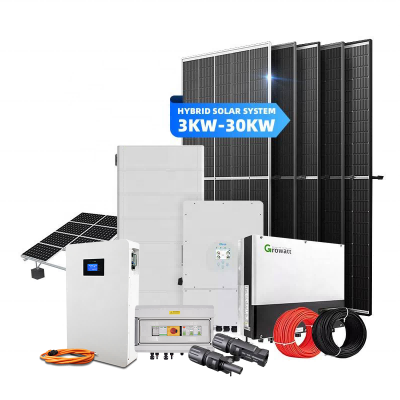
For buyers who need a complete residential package, PNG Solar also offers 10KW and 12KW hybrid solar energy systems, combining solar modules, a hybrid inverter, lithium battery storage, and supporting components.
Solar panels directly affect the energy production capacity of a residential system. However, module efficiency should not be the only factor in a supplier comparison.
Buyers should also review cell technology, power output, temperature characteristics, mechanical load performance, degradation rates, and warranty conditions.
Several points are particularly important:
For residential installations in Europe, North America, the Middle East, and other international markets, local climate conditions and applicable electrical requirements should influence product selection.
For example, coastal projects may require particular attention to corrosion resistance, while installations in hot climates should consider module temperature characteristics and inverter operating limits.
Buyers looking for modern photovoltaic technology can review PNG Solar's solar panel and N-type PV module product range when comparing available module options.
A hybrid inverter plays a central role in a residential solar system because it manages electricity generated by the solar panels, stored in the battery, supplied by the grid, and consumed by household appliances.
When comparing residential solar system manufacturers, buyers should check more than the inverter's rated output power.
One common purchasing mistake is assuming that batteries and inverters from different manufacturers will automatically work together. Even when voltage specifications appear similar, communication protocols and BMS settings may differ.
Request a compatibility list or written confirmation from the supplier before placing a bulk order. PNG Solar provides hybrid inverter solutions for buyers sourcing integrated solar power systems.
Battery storage is an increasingly important part of residential solar installations. It allows households to store excess electricity generated during the day and use it when solar production is low or electricity demand increases.
For most buyers evaluating modern residential energy storage systems, lithium iron phosphate (LiFePO4) batteries deserve attention because of their thermal stability, cycle life potential, and suitability for stationary energy storage applications.
Before choosing a battery supplier, compare these specifications:
For example, PNG Solar offers residential LiFePO4 battery options, including 51.2V configurations and stackable models. Its residential energy storage range can be explored through the Residential ESS product category.
Buyers should also request battery datasheets and confirm that the selected battery model is compatible with the intended inverter. This is especially important for distributors building standardized residential solar packages for different markets.
Certifications are another important factor when comparing residential solar system suppliers. A product that meets the requirements of one market may not automatically qualify for installation or distribution in another.
Global buyers should identify the applicable standards before selecting a supplier.
Ask suppliers for current certificates, test reports, and product-specific documentation. Check that the certificate model numbers match the products being quoted rather than relying on general company-level claims.
European buyers should pay attention to applicable EU product regulations and national grid codes. North American buyers should confirm the relevant UL and local utility requirements. Requirements can vary depending on product type and installation location.
A competitive quotation is not enough to establish whether a supplier is suitable for long-term cooperation. Buyers should also understand how the manufacturer handles production planning, component sourcing, customization, and order fulfillment.
This is particularly important for solar distributors, wholesalers, and EPC companies that need consistent product specifications across multiple projects.
Consider asking potential suppliers the following questions:
For buyers working with different customer segments, customization can be especially valuable. A supplier that can adjust system capacity, battery storage, inverter configuration, and branding may help distributors develop more suitable product packages.
PNG Solar, operated by Hefei Pinergy Solar Technology Co., Ltd., was established in 2017 and works across photovoltaic modules, energy storage systems, and solar power solutions. Its product portfolio supports buyers looking for integrated sourcing rather than purchasing every component separately.
Residential solar system suppliers may offer several system types. Choosing the correct configuration depends on grid availability, electricity consumption patterns, backup requirements, and local energy policies.
On-grid solar systems connect to the local utility grid and are generally designed to supply household electricity while reducing grid energy consumption. Their operation and export arrangements depend on local utility regulations.
Off-grid solar systems operate independently of the utility grid. They generally require battery storage and careful system sizing to support household loads during periods of limited sunlight.
Hybrid solar systems combine solar generation, battery storage, and grid connectivity. Depending on the inverter and system design, they can store surplus solar energy and provide backup power during grid interruptions.
For buyers comparing complete system packages, the best configuration is not necessarily the one with the highest power rating. It is the one that matches the actual load profile, installation conditions, and budget.
PNG Solar provides different configurations through its hybrid solar system solutions, alongside on-grid and off-grid options for different project requirements.
Before requesting a quotation or confirming an order, global buyers can use the following checklist to evaluate potential residential solar system suppliers more consistently.
| Evaluation Factor | What to Verify |
|---|---|
| Product range | Panels, inverters, batteries, accessories, and complete systems |
| Technical compatibility | Inverter and battery communication, voltage, and system configuration |
| Product quality | Datasheets, testing reports, warranties, and component traceability |
| Certifications | Product-specific documents for the destination market |
| Customization | System sizing, OEM branding, packaging, and configuration options |
| Delivery | Production lead time, shipping terms, packaging, and order capacity |
| After-sales service | Technical assistance, warranty procedures, and replacement support |
A useful comparison process should include at least two or three qualified suppliers. Request quotations based on the same system specifications so that pricing, technical performance, warranty coverage, and delivery conditions can be compared fairly.
For global distributors, wholesalers, installers, and project developers, working with a supplier that understands both individual solar components and complete system configurations can make procurement more efficient.
PNG Solar, also known as Hefei Pinergy Solar Technology Co., Ltd., is a China-based solar manufacturer and supplier established in 2017. The company focuses on photovoltaic modules, energy storage systems, and solar power solutions.
Its product portfolio covers several important areas of residential solar procurement:
For example, buyers can review the company's complete solar system solutions and lithium battery product range when planning residential energy storage projects.
Rather than comparing suppliers on price alone, buyers should evaluate whether the product range, system configuration, technical documentation, and cooperation model fit their business requirements.
If you are sourcing residential solar systems for distribution, installation, or project development, contact PNG Solar to discuss your required system capacity, battery configuration, destination market, and OEM requirements.
What is a residential solar system supplier?
A residential solar system supplier provides solar panels, inverters, batteries, accessories, or complete solar power systems designed for household electricity generation and energy storage. Some suppliers also offer OEM/ODM services and technical support for distributors and installers.
How do I choose a reliable residential solar system manufacturer?
Compare product quality, certifications, component compatibility, manufacturing capabilities, warranty conditions, delivery performance, and after-sales support. Request product-specific datasheets and test reports before placing an order.
Which solar battery is suitable for residential energy storage?
LiFePO4 batteries are a common choice for residential energy storage because of their thermal stability and cycle life potential. The appropriate battery depends on required capacity, inverter compatibility, daily energy consumption, and backup requirements.
What is the difference between an on-grid and hybrid solar system?
An on-grid system connects to the utility grid and typically operates without battery storage. A hybrid system combines grid connectivity with battery storage, allowing excess solar energy to be stored for later use and potentially providing backup power.
Can residential solar systems be customized for different countries?
Yes. System capacity, inverter configuration, battery voltage, mounting structures, electrical protection, and product documentation can be selected according to local installation conditions and market requirements. Grid compliance must be verified for each destination.
What information should I provide when requesting a solar system quotation?
Provide the required system capacity, daily electricity consumption, backup time, grid conditions, installation location, battery requirements, preferred inverter configuration, and destination country. This information helps suppliers prepare a more accurate quotation.



Signup our newsletter to get update information, promotion and insight.

 Email Us
Email : [email protected]
 Call Us
Tel : +8615606821994
Whatsapp : +8615606821994
 Address
No.6, Linquan East Road,Feidong New City Economic Development Zone, 231600 Hefei ,Anhui Province PRC.
© Hefei Pinergy Solar Technology Co., Ltd .All Rights Reserved. Sitemap | Blog | XML | Privacy Policy
 network supported


