Nov 06, 2026
Industrial solar energy solutions are becoming an increasingly practical investment for factories, warehouses, commercial buildings, and infrastructure projects across Saudi Arabia and the Middle East. With abundant sunshine throughout the year, businesses in the region have strong opportunities to reduce electricity costs, improve energy security, and support long-term sustainability goals.
However, installing an industrial solar power system in Saudi Arabia requires more than simply choosing high-efficiency solar panels. Extreme temperatures, desert dust, sandstorms, high solar radiation, and different grid connection requirements all influence system performance and equipment selection.
For industrial facilities, the most suitable solution often combines high-efficiency photovoltaic modules, reliable solar inverters, and battery energy storage. As a professional solar manufacturer, PNG Solar provides customized solar panels, energy storage systems, and on-grid, off-grid, and hybrid solar solutions for commercial and industrial applications worldwide.
Why Industrial Solar Energy Is Growing in Saudi Arabia and the Middle East
Saudi Arabia, the UAE, Oman, Qatar, Kuwait, and other Middle Eastern markets have favorable solar resources. For industrial businesses operating during daylight hours, rooftop and ground-mounted solar installations can help offset a substantial portion of daytime electricity consumption.
Several factors are driving demand for industrial solar energy solutions:
High solar irradiation: The region receives abundant sunlight, creating favorable conditions for photovoltaic power generation.
Rising industrial energy demand: Manufacturing facilities, logistics centers, warehouses, and commercial buildings require dependable electricity throughout their operations.
Energy cost management: Solar power can reduce dependence on conventional electricity sources and improve long-term energy cost planning.
Energy diversification: Businesses are exploring renewable energy to support national sustainability initiatives and corporate environmental targets.
Power reliability: Solar systems combined with battery storage can provide additional flexibility during grid interruptions, depending on system design.
Saudi Arabia's Vision 2030 and the wider Middle East energy transition are also encouraging greater investment in renewable energy infrastructure. For industrial buyers, this makes solar power an important consideration when planning new facilities or upgrading existing electrical systems.
Key Challenges of Installing Industrial Solar Systems in Desert Climates
Although the Middle East has excellent solar resources, its environmental conditions can be demanding for photovoltaic equipment. A reliable industrial solar energy solution must be designed around local operating conditions rather than standard installation assumptions.
High ambient temperatures
In Saudi Arabia, outdoor temperatures can reach 55°C under the service conditions specified in Saudi Electricity Company's technical standards. Solar module surfaces can become considerably hotter under direct sunlight. High operating temperatures may reduce module output and increase thermal stress on system components.
Industrial buyers should evaluate the temperature coefficient, operating temperature range, ventilation requirements, and thermal performance of solar modules and inverters before purchasing equipment.
Dust and sand accumulation
Desert dust can gradually accumulate on solar panel surfaces, reducing the amount of sunlight reaching photovoltaic cells. Sandstorms and airborne particles may also increase cleaning and maintenance requirements.
Appropriate mounting angles, accessible installation layouts, suitable module construction, and regular cleaning schedules help maintain system performance. Maintenance plans should consider local water availability and the risk of dust accumulation.
UV exposure and long-term durability
Solar panels installed in the Middle East are exposed to strong sunlight for extended periods. Buyers should review module certification, material quality, degradation specifications, and product warranties to evaluate long-term reliability.
Grid connection and electrical compatibility
Industrial solar projects must meet local electrical standards and utility interconnection requirements. In Saudi Arabia, projects should be reviewed against applicable Saudi Electricity Company and Water and Electricity Regulatory Authority requirements. Other Middle Eastern countries may have different grid codes and approval procedures.
These considerations make equipment selection, engineering design, and local project coordination essential parts of an industrial solar investment.
Best Industrial Solar Energy Solutions for Different Applications
The best solar configuration depends on the facility's electricity consumption, available installation space, grid conditions, and backup power requirements. There is no single system that fits every industrial project.
On-grid solar systems for factories and warehouses
On-grid solar systems are suitable for industrial facilities with an existing electricity connection and substantial daytime energy consumption. Solar-generated electricity is used directly by the facility, helping reduce the amount of electricity purchased from the grid.
For factories, distribution centers, and large commercial buildings, a properly designed grid-connected system can be an effective way to utilize unused rooftop or ground space.
PNG Solar offers customized commercial and industrial grid-tied configurations, including 500KW, 800KW, and 1MW solar system projects.
Explore industrial on-grid solar system solutions for different commercial power requirements.
Hybrid solar systems with battery storage
Hybrid solar systems combine photovoltaic modules, hybrid inverters, battery storage, and grid connections where applicable. They provide more flexibility than conventional grid-connected installations because excess solar electricity can be stored for later use.
For industrial facilities with variable electricity demand, battery storage can help manage energy consumption, support backup loads, and improve the utilization of solar-generated electricity.
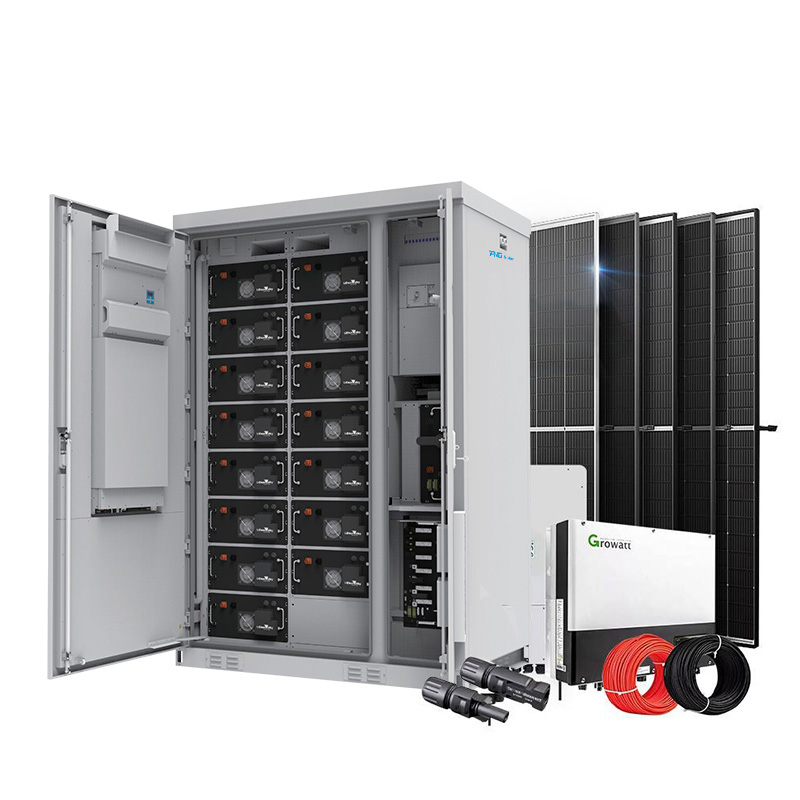
PNG Solar provides 100KW, 150KW, and 200KW hybrid solar energy storage systems for commercial and industrial applications. These configurations integrate solar panels, hybrid inverters, lithium batteries, mounting structures, and related electrical accessories.
For projects requiring both solar generation and energy storage, explore 100KW to 200KW industrial hybrid solar energy storage systems.
Off-grid solar systems for remote industrial facilities
Some industrial operations are located far from established electricity networks. Examples include remote agricultural facilities, mining support operations, telecommunications infrastructure, and isolated industrial sites.
Off-grid solar systems use photovoltaic modules, batteries, and suitable inverters to provide electricity without relying on a conventional utility connection. System capacity must be carefully calculated according to daily energy consumption, peak loads, battery autonomy, and backup generator requirements.
For these applications, explore PNG Solar's off-grid and hybrid solar system solutions.
Choosing High-Efficiency Solar Panels for Middle Eastern Industrial Projects
Solar modules are one of the most important components of an industrial photovoltaic system. For projects in Saudi Arabia and neighboring countries, buyers should consider power output, conversion efficiency, temperature coefficient, mechanical strength, and long-term degradation.
N-type TOPCon solar panels are worth considering for large commercial and industrial installations. This technology offers high conversion efficiency and strong potential for maximizing energy production within limited installation areas.
PNG Solar supplies N-type TOPCon photovoltaic modules in different power ranges, including high-power modules suitable for commercial and utility-scale applications.
When evaluating solar panels for desert environments, industrial buyers should pay attention to:
Module efficiency: Higher efficiency can help maximize installed capacity when roof or ground space is limited.
Temperature coefficient: A lower power temperature coefficient generally means less output reduction as cell temperature increases.
Mechanical load rating: Evaluate resistance to wind and other mechanical loads according to the installation location.
PID resistance: Check the module's resistance to potential-induced degradation under demanding operating conditions.
Warranty and degradation: Review product warranty terms and guaranteed long-term power output.
Certification: Confirm that the selected modules meet the technical and certification requirements of the intended project.
For more information about available module technologies, visit PNG Solar photovoltaic modules and compare different N-type solar panel options.
Why Battery Energy Storage Matters for Industrial Solar Systems
Battery energy storage is an important part of many modern industrial solar installations, particularly when electricity demand does not match solar generation throughout the day.
Solar panels generally produce the most electricity during daylight hours. However, some factories operate multiple shifts, experience evening peak demand, or need backup power for critical equipment.
A properly sized battery energy storage system can store surplus solar electricity and release it when required. Depending on the inverter configuration and electrical design, it can also support selected loads during grid interruptions.
Lithium iron phosphate (LiFePO4) batteries are commonly considered for stationary energy storage because of their thermal stability, cycle life, and suitability for repeated charging and discharging.
When selecting industrial battery storage, buyers should evaluate:
Usable battery capacity in kWh.
Maximum charging and discharging power.
Battery cycle life and depth of discharge.
Battery management system (BMS) protection.
Operating temperature and cooling requirements.
Compatibility between batteries and solar inverters.
Warranty conditions and after-sales support.
PNG Solar offers lithium battery products and energy storage solutions for different project requirements. Its industrial hybrid system configurations include lithium battery storage integrated with solar modules and hybrid inverters.
Explore lithium battery and energy storage solutions for commercial and industrial solar projects.
How to Size an Industrial Solar Energy System
Correct system sizing is essential for achieving a reasonable return on investment. An oversized system may increase upfront costs, while an undersized installation may not provide enough electricity to meet the facility's energy requirements.
Industrial solar system sizing should begin with actual electricity consumption rather than an estimated panel quantity.
The following factors should be reviewed during the planning stage:
Daily electricity consumption: Review historical electricity bills and energy meter data to understand actual demand in kWh.
Peak power demand: Identify the facility's maximum electrical load and the starting current of heavy machinery.
Operating schedule: Determine whether the factory operates during daylight hours, at night, or across multiple shifts.
Available installation area: Calculate usable rooftop or ground space, accounting for shading, access routes, and structural limitations.
Battery requirements: Estimate the required backup duration and the amount of energy that needs to be stored.
Local solar conditions: Consider irradiation, temperature, dust, and seasonal variations at the project site.
For example, PNG Solar's industrial hybrid system product range includes the following configurations:
System capacity
PV module configuration
Typical application
100KW
158 × 635W
Commercial facilities and smaller industrial projects
150KW
236 × 635W
Medium-sized industrial facilities
200KW
315 × 635W
Larger commercial and industrial applications
These are example configurations listed for PNG Solar's industrial hybrid system, not universal sizing recommendations. Actual project capacity, battery storage, inverter arrangement, and expected energy production should be confirmed through an engineering assessment.
A professional system design should also consider DC/AC ratios, inverter MPPT configuration, electrical protection, cable sizing, and local grid connection requirements.
Industrial Solar Applications Across the Middle East
Industrial solar energy solutions can be adapted to different facilities and business operations throughout the region.
Manufacturing plants: Factories with large rooftops and consistent daytime electricity consumption can use solar power to offset part of their production energy demand.
Warehouses and logistics centers: Large roof areas provide opportunities for rooftop PV installations, while battery storage can support selected operational loads.
Mining and remote industrial sites: Hybrid and off-grid solar systems can help supply electricity to locations where grid access is limited or expensive to extend.
Commercial buildings: Shopping centers, office complexes, and hotels can integrate solar generation with their existing electrical infrastructure to reduce grid electricity consumption.
Agricultural and water facilities: Solar power can support irrigation pumps, water treatment equipment, and other energy-intensive operations, subject to the system's load and operating requirements.
Whether a project is located in Riyadh, Jeddah, Dammam, Dubai, Abu Dhabi, Doha, Muscat, or Kuwait City, the solar system should be designed around local environmental conditions, energy consumption, and applicable electrical regulations.
How to Choose a Reliable Industrial Solar Manufacturer
For EPC contractors, solar distributors, project developers, and industrial procurement teams, choosing the right manufacturer is an important part of project planning.
Beyond the initial equipment price, buyers should consider product quality, technical support, customization capabilities, and long-term supply reliability.
Before placing an order, consider the following questions:
Does the manufacturer offer complete solar system configurations rather than individual components only?
Can the supplier provide technical datasheets and relevant product certifications?
Are different module capacities and battery configurations available?
Can the system be customized according to local voltage, frequency, and grid requirements?
Does the supplier provide product warranties and technical assistance?
Can the manufacturer support bulk orders and project-based procurement?
Working with an experienced solar manufacturer can simplify component selection and improve coordination between photovoltaic modules, inverters, batteries, and accessories.
PNG Solar, also known as Hefei Pinergy Solar Technology Co., Ltd., was founded in 2017 and specializes in the manufacturing and supply of solar panels, energy storage systems, and photovoltaic solutions. Its product portfolio covers N-type PV modules, solar inverters, lithium batteries, and customized solar power systems.
For industrial buyers and solar project developers, PNG Solar provides product selection and customized system configurations to support different commercial and industrial energy requirements.
Visit PNG Solar's contact page to discuss your project requirements and request product information.
Conclusion: Building Reliable Industrial Solar Projects in the Middle East
Industrial solar energy solutions offer significant opportunities for businesses across Saudi Arabia and the wider Middle East. However, successful projects depend on more than the availability of sunlight. High temperatures, dust accumulation, electricity demand patterns, battery requirements, and local grid regulations must all be considered during system design.
For factories, warehouses, commercial buildings, and remote industrial facilities, the right combination of N-type TOPCon solar panels, reliable inverters, and appropriately sized battery storage can provide a practical foundation for long-term energy management.
With its range of photovoltaic modules, lithium battery storage products, and customized 100KW to 200KW industrial hybrid systems, PNG Solar supports distributors, EPC contractors, and project developers seeking solar equipment and integrated solutions for Middle Eastern markets.
Contact PNG Solar to discuss your industrial solar project, compare system configurations, and identify suitable solar energy equipment for your local operating conditions.
Frequently Asked Questions About Industrial Solar Energy in Saudi Arabia and the Middle East
What is the best industrial solar energy solution for Saudi Arabia?
The best solution depends on electricity consumption and grid availability. On-grid solar systems are suitable for facilities with stable grid connections, hybrid systems are useful when battery storage is required, and off-grid systems are designed for remote facilities without reliable grid access.
Are solar panels suitable for Saudi Arabia's extreme temperatures?
Yes. Solar panels can operate in hot climates when the selected modules and system components meet the required environmental specifications. Saudi Electricity Company's technical standards specify outdoor ambient temperatures of up to 55°C under the stated service conditions, so temperature coefficients, installation design, and inverter operating limits should be carefully evaluated.
Which solar panel technology is suitable for industrial projects in the Middle East?
N-type TOPCon solar modules are a strong option for many industrial installations because of their high conversion efficiency and power density. Buyers should also compare temperature coefficients, mechanical load ratings, degradation specifications, and product warranties.
What industrial solar system capacities does PNG Solar offer?
PNG Solar lists 100KW, 150KW, and 200KW industrial hybrid solar energy storage configurations. Its broader solar system portfolio also includes customized 500KW, 800KW, and 1MW grid-connected projects. Final specifications depend on project requirements.
How many solar panels are needed for a 100KW industrial solar system?
In one PNG Solar product configuration, a 100KW hybrid system uses 158 solar panels rated at 635W each. The total PV module capacity is approximately 100.33KW DC. The final panel quantity depends on module wattage, inverter capacity, site conditions, and system design.
Is battery storage necessary for industrial solar systems?
Not always. On-grid systems can operate without batteries when the project is designed for direct grid-connected solar generation. Battery storage is more suitable when businesses need energy shifting, backup power for selected loads, or greater flexibility in managing electricity consumption.
How often should solar panels be cleaned in desert environments?
There is no universal cleaning interval. Maintenance frequency should depend on local dust accumulation, rainfall, seasonal sandstorms, energy yield monitoring, and water availability. Regular inspections and performance monitoring help determine when cleaning is necessary.
Can PNG Solar provide customized solar energy solutions for Middle Eastern projects?
Yes. PNG Solar offers different photovoltaic modules, hybrid inverters, lithium battery products, and customized solar system configurations. Buyers can provide their required system capacity, energy consumption, installation location, and backup requirements to discuss a suitable configuration.
{
"@context": "https://schema.org",
"@type": "FAQPage",
"mainEntity": [
{
"@type": "Question",
"name": "What is the best industrial solar energy solution for Saudi Arabia?",
"acceptedAnswer": {
"@type": "Answer",
"text": "The best solution depends on electricity consumption and grid availability. On-grid solar systems are suitable for facilities with stable grid connections, hybrid systems are useful when battery storage is required, and off-grid systems are designed for remote facilities without reliable grid access."
}
},
{
"@type": "Question",
"name": "Are solar panels suitable for Saudi Arabia's extreme temperatures?",
"acceptedAnswer": {
"@type": "Answer",
"text": "Yes. Solar panels can operate in hot climates when the selected modules and system components meet the required environmental specifications. Saudi Electricity Company's technical standards specify outdoor ambient temperatures of up to 55 degrees Celsius under the stated service conditions. Temperature coefficients, installation design, and inverter operating limits should be evaluated."
}
},
{
"@type": "Question",
"name": "Which solar panel technology is suitable for industrial projects in the Middle East?",
"acceptedAnswer": {
"@type": "Answer",
"text": "N-type TOPCon solar modules are a strong option for many industrial installations because of their high conversion efficiency and power density. Buyers should also compare temperature coefficients, mechanical load ratings, degradation specifications, and product warranties."
}
},
{
"@type": "Question",
"name": "What industrial solar system capacities does PNG Solar offer?",
"acceptedAnswer": {
"@type": "Answer",
"text": "PNG Solar lists 100KW, 150KW, and 200KW industrial hybrid solar energy storage configurations. Its broader solar system portfolio also includes customized 500KW, 800KW, and 1MW grid-connected projects. Final specifications depend on project requirements."
}
},
{
"@type": "Question",
"name": "How many solar panels are needed for a 100KW industrial solar system?",
"acceptedAnswer": {
"@type": "Answer",
"text": "One PNG Solar product configuration uses 158 solar panels rated at 635W each for a 100KW hybrid system. The total PV module capacity is approximately 100.33KW DC. The final panel quantity depends on module wattage, inverter capacity, site conditions, and system design."
}
},
{
"@type": "Question",
"name": "Is battery storage necessary for industrial solar systems?",
"acceptedAnswer": {
"@type": "Answer",
"text": "Not always. On-grid systems can operate without batteries when designed for direct grid-connected solar generation. Battery storage is more suitable when businesses need energy shifting, backup power for selected loads, or greater flexibility in managing electricity consumption."
}
},
{
"@type": "Question",
"name": "How often should solar panels be cleaned in desert environments?",
"acceptedAnswer": {
"@type": "Answer",
"text": "There is no universal cleaning interval. Maintenance frequency should depend on local dust accumulation, rainfall, seasonal sandstorms, energy yield monitoring, and water availability. Regular inspections and performance monitoring help determine when cleaning is necessary."
}
},
{
"@type": "Question",
"name": "Can PNG Solar provide customized solar energy solutions for Middle Eastern projects?",
"acceptedAnswer": {
"@type": "Answer",
"text": "Yes. PNG Solar offers different photovoltaic modules, hybrid inverters, lithium battery products, and customized solar system configurations. Buyers can provide their required system capacity, energy consumption, installation location, and backup requirements to discuss a suitable configuration."
}
}
]
}




 Email Us
 Call Us
 Address
 network supported


