Nov 16, 2026
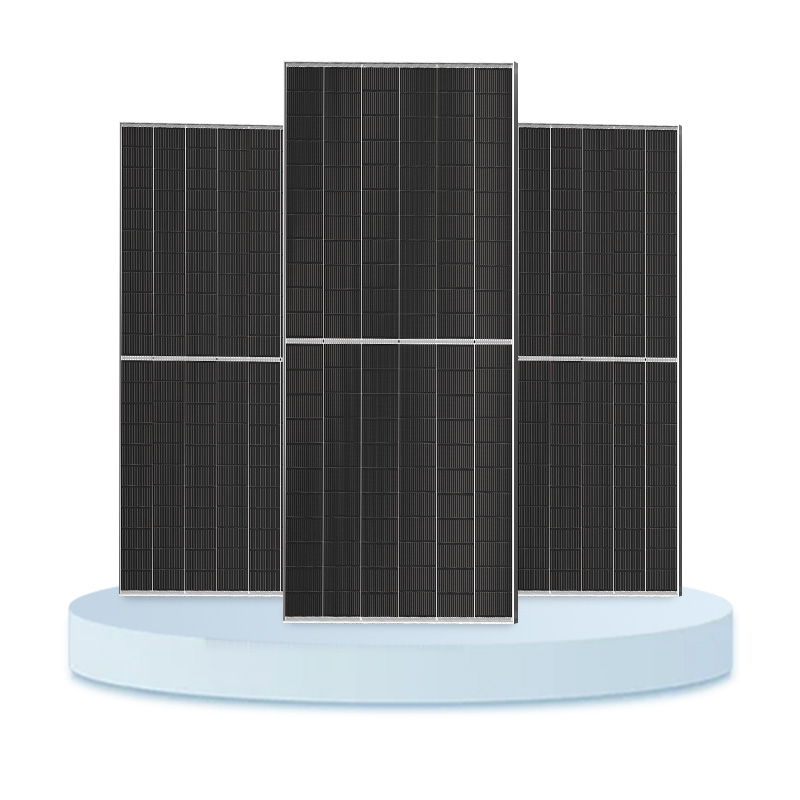
An N-type monocrystalline solar panel uses phosphorus-doped silicon cells to convert sunlight into electricity with high efficiency and relatively low degradation. Compared with traditional P-type PERC panels, N-type TOPCon modules generally offer better temperature performance, higher bifaciality, and more stable long-term energy output.
What Is an N-Type Monocrystalline Solar Panel?
An N-type monocrystalline solar panel is a photovoltaic module made from single-crystal silicon wafers with phosphorus as the primary dopant. This creates a negatively charged semiconductor base, which provides a different electrical structure from conventional P-type silicon cells.
N-type technology has become increasingly important in the solar industry because it can reduce light-induced degradation and support higher cell efficiency. Two widely used N-type technologies are TOPCon (Tunnel Oxide Passivated Contact) and HJT (Heterojunction Technology).
TOPCon improves the cell structure by introducing an ultra-thin tunnel oxide layer and a passivated contact. This helps reduce carrier recombination and improve electrical performance.
For solar project buyers, N-type technology is particularly relevant when roof space, high operating temperatures, long-term output, or bifacial energy generation are important considerations.
PNG Solar PV offers several N-type solar module options, including monocrystalline TOPCon modules designed for residential, commercial, and utility-scale applications.
How Does N-Type Technology Differ from P-Type PERC?
The main difference is the silicon wafer structure and cell architecture. N-type TOPCon uses phosphorus-doped silicon and passivated contacts, while P-type PERC generally uses boron-doped silicon with a passivated rear surface.
Both technologies use monocrystalline silicon, but their approaches to reducing electrical losses and maintaining output over time are different.
Comparison Parameter
N-Type TOPCon
P-Type Mono PERC
Silicon wafer doping
Phosphorus-doped
Boron-doped
Typical module efficiency
22%–24%
20.5%–22%
Pmax temperature coefficient
-0.26% to -0.30%/°C
-0.34% to -0.36%/°C
Typical annual degradation
0.30%–0.40%
Approximately 0.45%
Bifaciality factor
Approximately 80%–85%
Approximately 65%–75%
Typical first-year degradation
Approximately 1.0%
Approximately 2.0%
Light-induced degradation
Very low LID
More susceptible to LID
Typical performance warranty
Up to 30 years, depending on product
Commonly 25 years, depending on product
Note: These are indicative technology-level comparison values, not guaranteed specifications for every module. Efficiency, temperature coefficients, bifaciality, and degradation warranties vary by manufacturer, cell design, and product generation. Actual purchasing decisions should use the latest product datasheet and warranty document.
The key advantage of N-type TOPCon is not simply higher rated power. Its lower typical degradation and improved temperature response can help maintain energy production over a longer operating period.
Why Is N-Type TOPCon More Efficient Than PERC?
Efficiency measures how much incoming sunlight a solar module converts into usable electrical power. A higher module efficiency means more rated power can be installed within the same available surface area.
N-type TOPCon technology reduces recombination losses through its passivated contact structure. This allows more generated electrical carriers to contribute to useful current rather than being lost inside the cell.
Typical commercial N-type TOPCon modules can achieve approximately 22%–24% module efficiency, while many conventional P-type PERC modules fall around 20.5%–22%. The exact difference depends on module dimensions, cell format, and product generation.
For example, PNG Solar PV lists a 625W–650W N-type double-glass bifacial TOPCon module with stated module efficiencies ranging from 23.10% to 24.06% on its product page.
View the 625W–650W N-type bifacial solar module for its published electrical and mechanical specifications.
For commercial and utility-scale projects, higher module efficiency can reduce the number of modules, mounting structures, and installation area needed to achieve a particular DC capacity. However, system design must also account for module dimensions, inverter compatibility, and site conditions.
How Does the Temperature Coefficient Affect Solar Panel Performance?
The temperature coefficient indicates how much a solar module's maximum power output changes when its cell temperature rises above the standard test temperature of 25°C.
A temperature coefficient closer to zero generally indicates better power retention under high-temperature operating conditions.
For example, consider two modules operating at a cell temperature of 65°C. The temperature is 40°C above the STC reference temperature.
N-type TOPCon at -0.29%/°C: approximately 11.6% power reduction.
P-type PERC at -0.35%/°C: approximately 14.0% power reduction.
This represents an illustrative difference of 2.4 percentage points in temperature-related power loss, assuming the same initial rated power and otherwise identical operating conditions.
Lower temperature sensitivity is particularly useful for solar installations in hot climates, including the Middle East, Africa, South Asia, and parts of North America.
Important product specification check: PNG Solar PV's published 715W–740W TOPCon module and 625W–650W bifacial TOPCon module pages currently list a Pmax temperature coefficient of -0.36%/°C. This differs from the commonly cited TOPCon reference range above. Buyers should request the current certified datasheet for the exact offered model rather than assuming all TOPCon products have the same thermal performance.
Does N-Type Solar Technology Have a Lower Degradation Rate?
Yes, N-type TOPCon modules generally have lower initial light-induced degradation and lower subsequent annual degradation than conventional P-type PERC modules.
Degradation describes the gradual reduction in a solar panel's electricity output over its operating life. It is an important factor when calculating the long-term return of a solar project.
The two degradation measurements buyers should understand are:
First-year degradation: The reduction in rated power during the first year of operation. Typical comparison values are around 1% for N-type TOPCon and 2% for P-type PERC.
Annual degradation after the first year: The additional yearly reduction in output. Typical reference values are 0.30%–0.40% for TOPCon and approximately 0.45% for PERC.
For illustration, assume a module starts at 100% rated power and follows a warranty degradation model of 1% in the first year and 0.40% annually afterward. Its remaining rated power after 25 years would be approximately 90.4%.
Under a PERC model with 2% first-year degradation and 0.45% annual degradation afterward, the corresponding figure would be approximately 87.7%.
These calculations illustrate the effect of different degradation assumptions. They are not measured field results or guaranteed output figures for a particular product.
Actual degradation also depends on environmental exposure, installation quality, operating conditions, and module materials. Buyers should compare the manufacturer's linear power warranty rather than relying on technology labels alone.
Why Is the Bifaciality Factor Important for N-Type Solar Panels?
Bifaciality measures how much electrical power a solar panel can generate from its rear side compared with its front side under specified test conditions.
For example, a module with an 80% bifaciality factor can produce approximately 80% of its front-side reference power from the rear side under equivalent irradiance conditions.
N-type TOPCon bifacial modules commonly achieve bifaciality values around 80%–85%, while conventional PERC bifacial modules often fall around 65%–75%.
However, bifaciality does not mean a solar panel automatically generates 80% more electricity. Actual rear-side energy gain depends on:
Ground reflectivity, also known as albedo.
Module mounting height and tilt angle.
Row spacing and shading conditions.
Ground surface materials, such as concrete, gravel, or reflective roofing.
Rear-side irradiance and installation layout.
For ground-mounted solar farms, commercial installations, and other projects with suitable rear-side light exposure, bifacial N-type modules can provide additional energy generation.
PNG Solar PV's double-glass bifacial TOPCon panels are one product option for buyers evaluating this type of installation.
Which Solar Projects Benefit Most from N-Type TOPCon Panels?
N-type TOPCon is a practical choice for projects where high module efficiency, long-term energy production, and improved temperature performance are important. However, the best technology still depends on the project budget and installation environment.
Commercial and industrial rooftops: Higher module efficiency helps maximize installed capacity when available roof space is limited.
Utility-scale solar farms: Higher bifaciality can provide additional energy generation when the ground surface and mounting layout support rear-side irradiance.
Hot-climate installations: Modules with favorable Pmax temperature coefficients can retain more output during high-temperature operating conditions.
Long-term investment projects: Lower warranted degradation can improve lifetime energy production and support more predictable project planning.
Residential solar systems: High-efficiency N-type modules can be useful where roof area is limited or homeowners want to maximize installed capacity.
For smaller rooftop installations, buyers should also compare module dimensions, aesthetics, available installation space, and total system costs. A higher-efficiency panel is not automatically the most economical option in every situation.
What N-Type Solar Panel Options Does PNG Solar PV Offer?
PNG Solar PV provides several N-type monocrystalline TOPCon module options for different installation requirements, including residential rooftops, commercial projects, and larger photovoltaic systems.
Examples of products listed on the company's website include:
460W–485W full-black N-type TOPCon modules: A product range suited to buyers considering residential and visually integrated rooftop installations.
625W–650W double-glass bifacial TOPCon modules: Designed for applications where front-side and rear-side power generation are both relevant.
715W–740W N-type TOPCon modules: Higher-power module options for commercial and large-scale solar projects.
For project buyers comparing module suppliers, the company's 715W–740W N-type TOPCon solar panel range provides published electrical and mechanical specifications for evaluation.
When requesting a quotation, buyers should confirm the exact model number, rated power, module efficiency, temperature coefficient, bifaciality, degradation warranty, and applicable product certifications.
How Should Buyers Choose Between N-Type TOPCon and PERC?
The choice should be based on total energy production and project economics rather than module price alone.
N-type TOPCon is generally worth considering when:
Available installation space is limited.
The project operates in a hot climate.
Bifacial energy generation is part of the system design.
Long-term output retention is a major purchasing consideration.
P-type PERC may still be suitable when the project has a tight initial budget, sufficient installation space, and access to competitively priced modules with acceptable warranties.
Before selecting a supplier, request the following technical documents:
IEC 61215 and IEC 61730 certificates applicable to the offered module model.
Current product datasheet with STC electrical specifications.
Temperature coefficient and bifaciality test information.
Product warranty and linear power output warranty.
Factory quality-control and product traceability documentation.
For international buyers, it is also important to check the applicable market requirements, shipping conditions, and project-specific compliance standards before placing an order.
FAQ About N-Type Solar Panels
What is the main advantage of an N-type solar panel?
The main advantage of an N-type solar panel is its potential for higher conversion efficiency, lower light-induced degradation, and better long-term output retention compared with conventional P-type PERC technology. N-type TOPCon modules also generally offer higher bifaciality.
Are N-type solar panels better than PERC panels?
For many modern solar projects, N-type TOPCon panels offer advantages in efficiency, degradation, and bifacial performance. However, PERC panels can remain competitive where initial purchase cost is the main priority.
What is the temperature coefficient of N-type TOPCon solar panels?
A common reference range for N-type TOPCon modules is approximately -0.26% to -0.30%/°C. The exact value depends on the manufacturer and module design, so buyers should check the product datasheet.
How long do N-type solar panels last?
Many N-type TOPCon modules come with 25- or 30-year linear power warranties. Their actual service life depends on product quality, environmental conditions, installation, and maintenance. A warranty period should not be interpreted as a guaranteed failure-free operating life.
Are bifacial N-type solar panels worth the investment?
Bifacial N-type solar panels can be worthwhile when the installation provides sufficient rear-side irradiance. Their economic benefit depends on ground reflectivity, mounting design, shading, additional installation costs, and the expected rear-side energy gain.
Author: PNG Solar Technical Team
Technical reference and data sources: Published PNG Solar PV product datasheets; Fraunhofer-related PV module comparison project report; NREL photovoltaic research publications; and representative manufacturer TOPCon and PERC technical specifications.
Data clarification: Efficiency, temperature coefficient, bifaciality, and degradation figures in this article are technology-level reference values unless a specific PNG Solar PV product is identified. Warranty values and actual module performance must be verified against the latest model-specific documentation.
{
"@context": "https://schema.org",
"@type": "FAQPage",
"mainEntity": [
{
"@type": "Question",
"name": "What is the main advantage of an N-type solar panel?",
"acceptedAnswer": {
"@type": "Answer",
"text": "The main advantage of an N-type solar panel is its potential for higher conversion efficiency, lower light-induced degradation, and better long-term output retention compared with conventional P-type PERC technology. N-type TOPCon modules also generally offer higher bifaciality."
}
},
{
"@type": "Question",
"name": "Are N-type solar panels better than PERC panels?",
"acceptedAnswer": {
"@type": "Answer",
"text": "For many modern solar projects, N-type TOPCon panels offer advantages in efficiency, degradation, and bifacial performance. However, PERC panels can remain competitive where initial purchase cost is the main priority."
}
},
{
"@type": "Question",
"name": "What is the temperature coefficient of N-type TOPCon solar panels?",
"acceptedAnswer": {
"@type": "Answer",
"text": "A common reference range for N-type TOPCon modules is approximately -0.26% to -0.30% per degree Celsius. The exact value depends on the manufacturer and module design, so buyers should check the product datasheet."
}
},
{
"@type": "Question",
"name": "How long do N-type solar panels last?",
"acceptedAnswer": {
"@type": "Answer",
"text": "Many N-type TOPCon modules come with 25- or 30-year linear power warranties. Their actual service life depends on product quality, environmental conditions, installation, and maintenance."
}
},
{
"@type": "Question",
"name": "Are bifacial N-type solar panels worth the investment?",
"acceptedAnswer": {
"@type": "Answer",
"text": "Bifacial N-type solar panels can be worthwhile when the installation provides sufficient rear-side irradiance. Their economic benefit depends on ground reflectivity, mounting design, shading, additional installation costs, and expected rear-side energy gain."
}
}
]
}




 Email Us
 Call Us
 Address
 network supported


